
Across climates and centuries, people arrived at the same solution: a woven rectangle worn around the upper body. Sometimes it's folded like a scarf. Sometimes it's belted. Sometimes it carries a child or a bundle. Sometimes it reads ceremonial. The form is consistent because the function is consistent: warmth, portability, protection, and adaptability.
This is a field guide to shawl-like textiles across regions — different names, different fibres, different techniques, one shared logic.
Why the rectangle keeps appearing
A wrap is effective because it scales with conditions. It insulates without rigid tailoring. It adapts — drape loose, wrap tight, wear over or under outerwear. It folds flat, travels well, and repairs easily. It serves as clothing, blanket, shade, carrier, and barrier against wind or dust.
The garment isn't "invented" once. It's a repeated human answer.
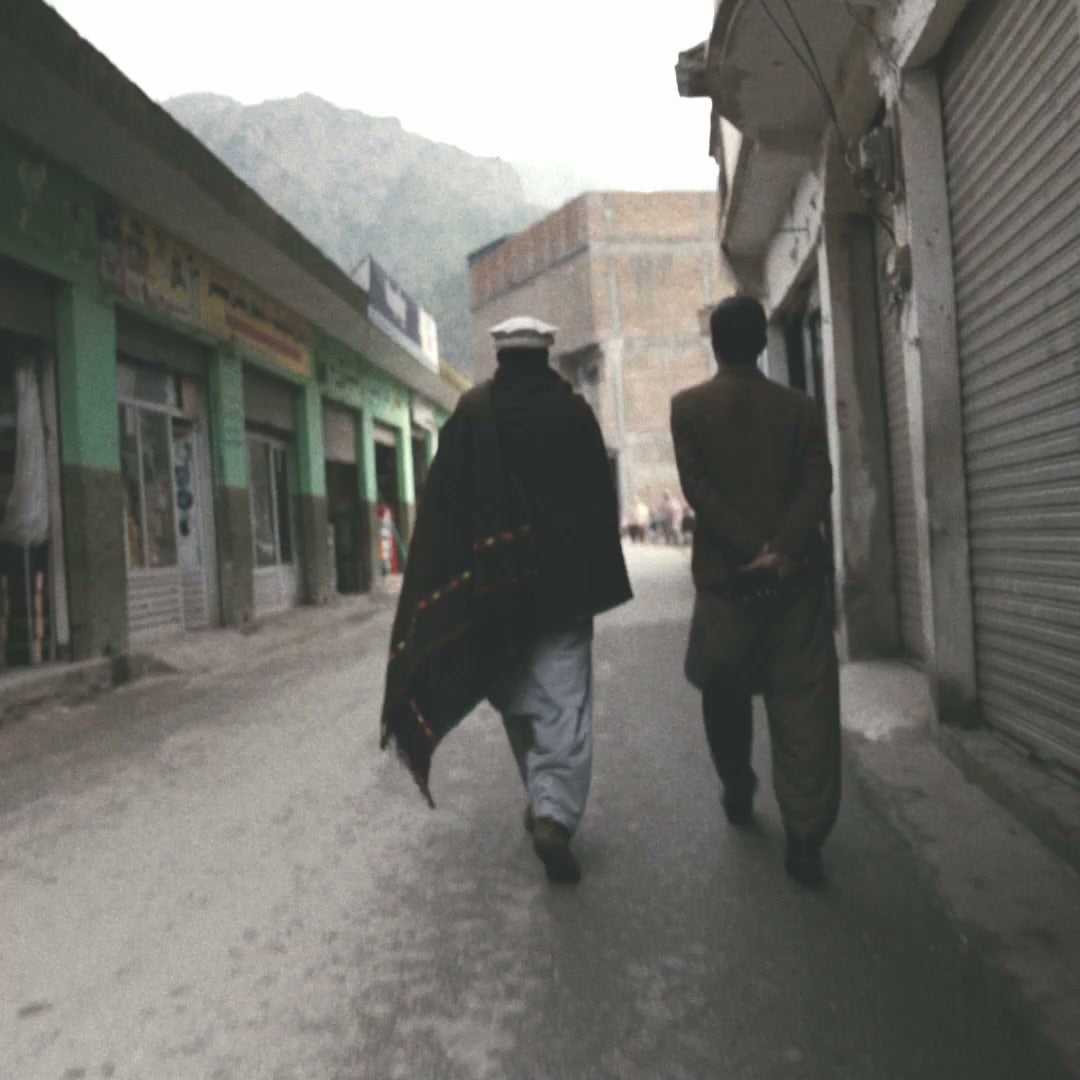
South and Central Asia
Pakistan: Kashmir shawls, pashmina, and printed wraps
In and around Kashmir, wool shawls became highly developed as a craft category — fine fibres, controlled weaving, and distinctive finishing. The "Kashmir shawl" is widely documented as a specific tradition of woollen shawls, with an industry associated (by tradition) with the 15th-century Kashmiri ruler Zayn-ul-ʿĀbidīn and with references extending back much earlier.
Pakistan also has wrap textiles that function as shawls beyond the Kashmir category — especially printed and dyed cloths worn as shoulder wraps, including Ajrak, a block-printed textile commonly used in shawl and wrap formats. In the mountainous Swat Valley, where cold winters and long-standing textile traditions shape daily life, handwoven wool shawls remain an everyday outer layer rather than an accessory. This region's weaving tradition — using manual looms and natural wool fibres — is the foundation of SHAAL's own production.
Afghanistan (and border regions): the patu as blanket-shawl
In mountainous areas across Afghanistan and nearby regions, a common format is the patu: a heavier, blanket-like wrap worn for insulation and used interchangeably as a shawl and blanket. The logic is maximum warmth and coverage — a single piece that performs outdoors and indoors. The SHAAL Blanket, at 150 × 270 cm, draws on this same principle of an oversized wrap designed for full-body coverage and shared use.
Iran: large wraps as coverage and outer layer
In Iran, the chador is a clear example of the "single cloth wrap" concept at full scale — an outer garment formed by a large piece of fabric draped around the body. While its purpose and styling differ from a typical wool shawl, it reinforces how widely the wrap format appears as a practical, direct garment solution.
Europe
Scotland: the belted plaid
In Highland Scotland, the belted plaid (féileadh mòr / "great kilt") historically functioned as a large piece of cloth belted at the waist and worn with fabric brought up over the body — part garment, part blanket. It's a direct European expression of the same idea: a wearable textile that can shift with weather and terrain. The belted approach is still one of the most practical ways to wear a shawl today — cinching it at the waist transforms a loose rectangle into a structured outer layer.
The Americas
The Andes (Peru / Bolivia): awayu and lliclla
In the Andes, the wrap is often explicitly multi-functional. The ahuayo is commonly understood as a woven cloth used as a baby-carrier, carrying cloth, mantle, ceremonial textile, and more — one object with many roles. Related forms include the lliclla (a mantle) and carrying cloth variants — again showing the same geometry used for warmth, carrying, and daily life.
Mexico: the rebozo
The rebozo is a long, flat, shawl-like garment worn in Mexico, used for warmth, shade, and carrying bundles and babies. It has been woven in cotton and is often made with distinctive techniques such as ikat-style patterning. The wrap is both garment and tool.
Africa
Ethiopia (and Eritrea): netela and shamma
In the Ethiopian highlands, lightweight cotton wraps such as netela and shamma are widely referenced as traditional garments used for coverage and comfort in changing temperatures. Breathable coverage, layering, and adaptability across day and night shifts.
One form, many interpretations
When you step back, the pattern is clear. The wrap appears wherever temperature changes, travel, and daily practicality matter. Fibres shift — wool, cotton, camelid hair — based on environment and local resources. Weaving and finishing become the differentiator once the form is established.

This is part of why the shawl remains current. The silhouette is not tied to a single era. It's a stable format that can be made modern through proportion, weight, and finishing — without changing the underlying idea.
SHAAL's collection works from the same principle these traditions share: a handwoven rectangle, defined by its materials and construction rather than by cut or decoration. From a light pashmina to a dense yak wool blend, the form stays constant. What changes is the weight, the fibre, and how it's worn. For a breakdown of each construction, see the guide to SHAAL.