
Yak wool, explained properly
The warmest fibre we weave, from animals that live through Himalayan winters. What it is, how it compares to cashmere and merino, and when it is the right buy.
What yak wool actually is
Yaks grow two coats: a coarse outer hair and a fine, dense undercoat of down that carries them through high-altitude winters. The down is what gets spun. It is shed naturally each spring and combed out rather than sheared, collected by herding families in small quantities; each animal yields only a little usable down each spring. That scarcity is why you rarely see it, and why very few UK brands sell it.
Why it is so warm
Warmth in wool is trapped air, and finer, denser fibres trap more of it per gram. Yak down is finer than ordinary sheep's wool, comparable to premium goat fibres, and it evolved for colder conditions than either. Woven into a dense cloth it insulates beyond its weight. Ours, stated plainly, is a blend: 60% yak down and 40% lambswool, woven to 400 gsm, the heaviest and warmest cloth in the SHAAL range. The yak down does the insulating; the lambswool gives the weave its structure and working life. The next heaviest construction, our all-lambswool Heavyweight, sits at 313 gsm.
Yak vs cashmere, honestly
Cashmere is softer. It is not close, and anyone selling yak who says otherwise is selling. What yak gives you instead: more warmth for the same weight, better resistance to pilling, and a cloth that holds its shape in heavy constructions where cashmere goes limp. Cashmere is the fibre for softness against the neck; yak is the fibre for cold. The full comparison, with the trade-offs laid out properly, is in yak wool vs cashmere.
Yak vs merino
Merino is the standard for fine sheep's wool and it is excellent next to skin, which is why it owns base layers. But merino cloth at shawl weights is a mid-warmth fabric. Yak down is finer and warmer per gram; at outer-layer weights the difference is obvious the first cold morning you wear it. If you want the background on wool grades generally, start with types of wool.
How we weave it
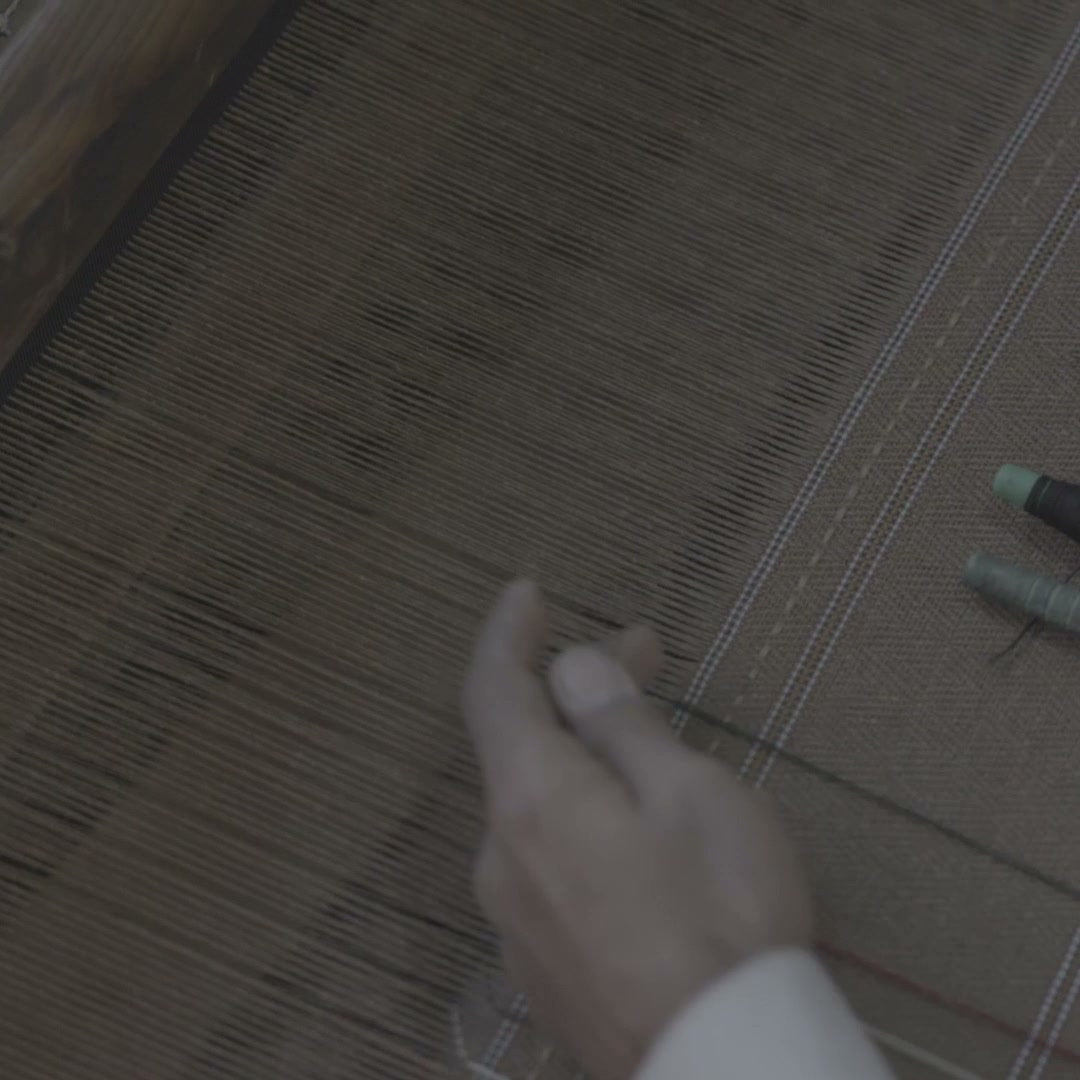
Every SHAAL yak shawl is woven by hand on a Khadi pit-loom in the Swat Valley, northern Pakistan; one weaver spends a full working day on each piece. Handweaving matters more with yak than with most fibres: the dense 400 gsm cloth needs a weave that stays supple, and the slight liveliness of hand-laid weft is what keeps that weight wearable rather than stiff.
When yak is the right buy
Buy yak if you want a shawl as serious outerwear: commuting through winter, outdoor evenings, mountain weather, or replacing a coat above freezing using the full wrap (shown step by step in how to wear a shawl). Buy cashmere or pashmina if softness is the point and warmth is secondary. Buy lambswool if you want the all-rounder.
Questions
Is yak wool itchy?
It is noticeably softer than ordinary sheep's wool and most people wear it directly at the neck without trouble. It is not as soft as cashmere; that trade is what buys the warmth and durability.
Is yak wool warmer than merino or cashmere?
Weight for weight, yes. Yak down is finer than sheep's wool and evolved for harsher cold than either merino sheep or cashmere goats typically face. At 400 gsm it is the warmest cloth we make.
How do I care for a yak wool shawl?
The same as any fine wool: wear it often, wash it rarely. Air it between wears, spot-clean when needed, hand wash cold with wool detergent only when necessary, and dry it flat. Full notes in how to wash a wool shawl.
60% yak down, 40% lambswool, 400 gsm, two genderless sizes.