
Lay all three flat on a table and the answer is obvious before anyone says a word. A scarf is a long, narrow strip. A shawl is a great rectangle, near enough a small blanket. A wrap sits between them and looks slightly unsure of which it wants to be. The words get muddled in shops and on labels, but the cloth itself does not lie. Size is the cleanest way to tell them apart, so let's start there.
It comes down to width
A scarf is narrow. Most land around 30 cm wide and 180 cm long, give or take. That shape exists for one job: to go round the neck, loop or knot, and trap warm air against the throat without bulking out the rest of you. You can wear a coat over it and barely notice it is there.
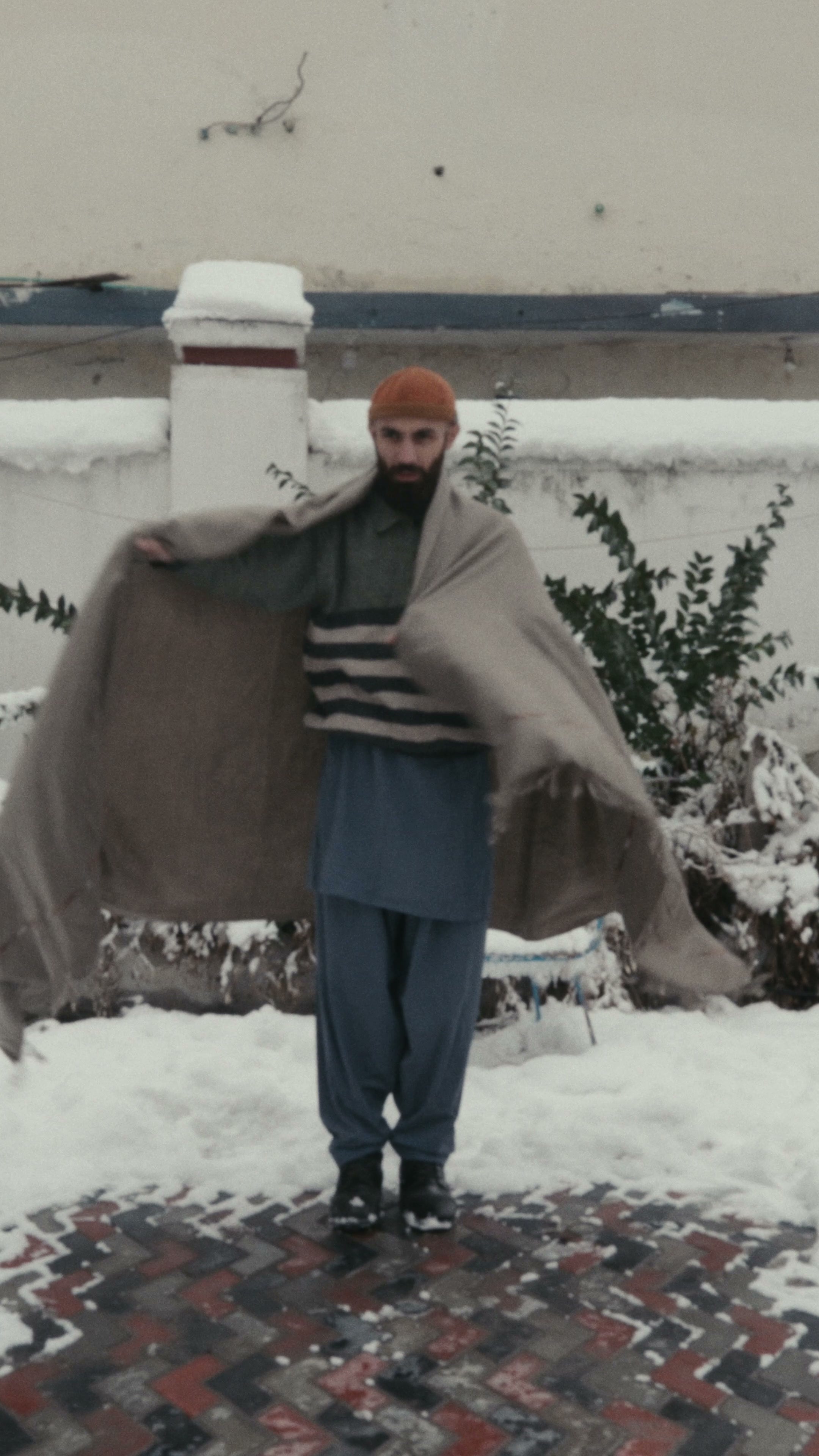
A shawl is a different animal. A typical one runs about 100 cm by 200 cm, which is enough to cover both shoulders and your back at once, or to fold in half and still have real coverage. That extra width is the whole point. It buys you drape. Cloth needs surface area to fall in proper folds rather than hang like a tea towel, and a shawl has it.
A wrap, sometimes sold as a stole, lands in the middle at roughly 70 cm by 180 cm. Wider than a scarf, narrower than a shawl. Wide enough to sit across the shoulders and stay put, not so wide that it swamps you over an evening dress. If you have ever picked something up and thought "that is too big for a scarf but I would not call it a shawl," it was almost certainly a wrap.
What each one is actually for
Dimensions tell you the shape. Use tells you the why.
A scarf is about the neck. Warmth, mostly, and a bit of colour near the face. It is the layer you keep on indoors when the office is cold and take off the second you sit down to dinner. Functional, quick, undemanding.
A shawl is about cover and drape. It goes over the whole upper body, and it falls. You wear one round the house on a grey afternoon, throw it over a coat for a long walk, or fold it as a layer on a cold evening. Our handwoven heavyweight wool shawl is built for exactly that weight of use: dense cloth that holds a fold and keeps the wind out. There is a reason the shawl, not the scarf, is the garment with the long history. People have wrapped themselves in big rectangles of wool for thousands of years because a big rectangle of wool simply works.
A wrap is about the shoulders and the occasion. Evenings, travel, in-between weather. It is the thing you keep in a bag for an over-air-conditioned train or a restaurant that runs cold, and the thing that goes over bare arms when the temperature drops after dark. A lighter midweight pashmina blend does this job well: soft enough to fold small, warm enough to matter.
Where the words blur (and why nobody agrees)
Here is the honest part. In real life the categories leak. A "blanket scarf" is a square shawl that someone marketed as a scarf because the word sells better, and we have written a whole piece on the blanket scarf for that reason. A "pashmina" can mean a fibre, a wrap or a shawl depending on who is talking. A stole and a wrap are, for most purposes, the same thing under two names.
The blur is not laziness, it is history. These garments came from different places and different languages, then got translated into English shop labels by people who cared more about selling than about taxonomy. The word "shawl" itself comes from the Persian *shal*, brought west on the cloths of Kashmir, while "scarf" has roots in a French word for a sash. Two separate stories, now sharing a shelf.
So treat the names as a rough guide, not a law. If you are buying online, ignore the noun on the label and read the dimensions. That number tells you what you are actually getting better than any product title will.
Which one do you want?
Think in terms of the job. If you mainly want warmth at the neck under a coat, a scarf. If you want something to wrap up in at home, for cover and for drape, a shawl. If you want a lighter layer for the shoulders, for evenings and travel, a wrap. The lines between them are real, even if the labels are not.
If you want to go deeper into how the cloth itself differs, from fibre to weave, our guide to SHAAL lays out the lot. Once you know the size you are after, the rest is just deciding how warm you want it.