
A shawl does not generate heat. Nothing you wear does. What a good one does is slow the rate at which your own heat escapes, and the way it manages that comes down to one thing: trapped still air. Air is a poor conductor, so a layer of motionless air sitting against your skin is excellent insulation. The moment that air can move, by leaking out at the edges or being pushed through the cloth by wind, the warmth goes with it.
That is the whole game. Once you understand it, the marketing falls away and three levers are left: fibre, weight, and weave. Almost every "warmest shawl" claim is really a claim about one of those, usually badly explained.
Fibre: fineness and loft, not thickness
People assume warmth means a thick, coarse cloth. It is closer to the opposite. Finer fibres pack more densely and crimp more, and crimp is what holds the little pockets of still air I mentioned. A fibre that springs and curls traps far more air than a straight, stiff one.
This is why animal fibres beat synthetics for warmth-to-weight. Acrylic feels warm in the shop because it is dense and windproof, but it does not loft and it does not breathe, so it goes clammy and the warmth is shallow. Wool crimps. Cashmere is finer still. And yak down, the soft undercoat rather than the guard hair, sits around 16 to 18 microns and lofts beautifully, which is why a yak cloth can feel warmer than a heavier wool one at the same weight. If you want the fibre side of this in more detail, our piece on the types of wool goes through fineness fibre by fibre.
So the order, roughly, for sheer insulation: yak and good fine wool first, cashmere close behind for its softness rather than its raw warmth, synthetics last. Cashmere is the luxurious choice, not the warmest one, and those are not the same question.
Weight and GSM: more cloth, more trapped air
GSM is grams per square metre, the weight of the fabric. A higher number means more fibre in the same area, which means more depth for air to hide in. A light spring scarf might sit around 150 to 200 GSM. A proper winter shawl wants to be a good deal heavier, into the 300s and beyond, because that extra mass is doing real insulating work.
There is a sensory test for this. Pick the cloth up and let it hang. A warm winter shawl has a quiet, settled weight to it. It drapes rather than floats. You can feel that there is something there. Our handwoven heavyweight wool shawl is built exactly for that heft, a dense woollen cloth that hangs and holds its air. If you want the warmest single thing we make, it is the handwoven yak shawl, where the heavy weight and the lofty yak down stack on top of each other.
Weight has a limit, mind. Past a point you are carrying a rug, not wearing a shawl, and the drape suffers. The skill is heavy enough to insulate, supple enough to wrap twice round the neck without feeling like armour.
Weave: density is your windbreak
Two shawls of the same fibre and the same GSM can still behave differently in the cold, and weave is usually why. A tight, dense weave gives wind very little to push through, so the air you have trapped stays put. A loose, open weave looks lovely and breathes well, but on an exposed platform in January it leaks.
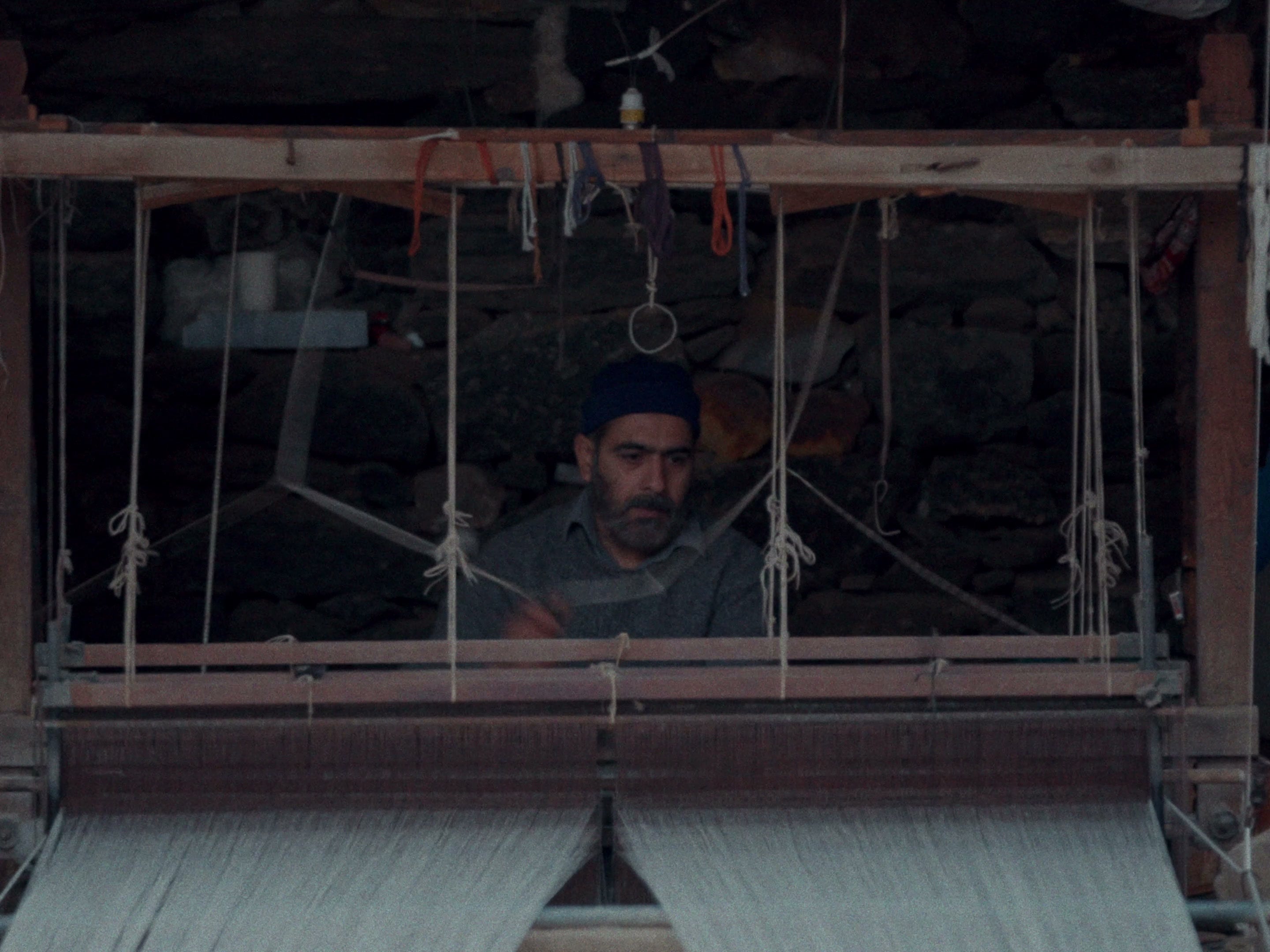
Handweaving on a manual loom lets the weaver beat the weft down hard, packing the threads close. That density is part of why a handwoven cloth can feel more solid against a cold wind than a machine-milled one of similar weight. It is not magic, it is just tighter cloth.
So what should you actually buy
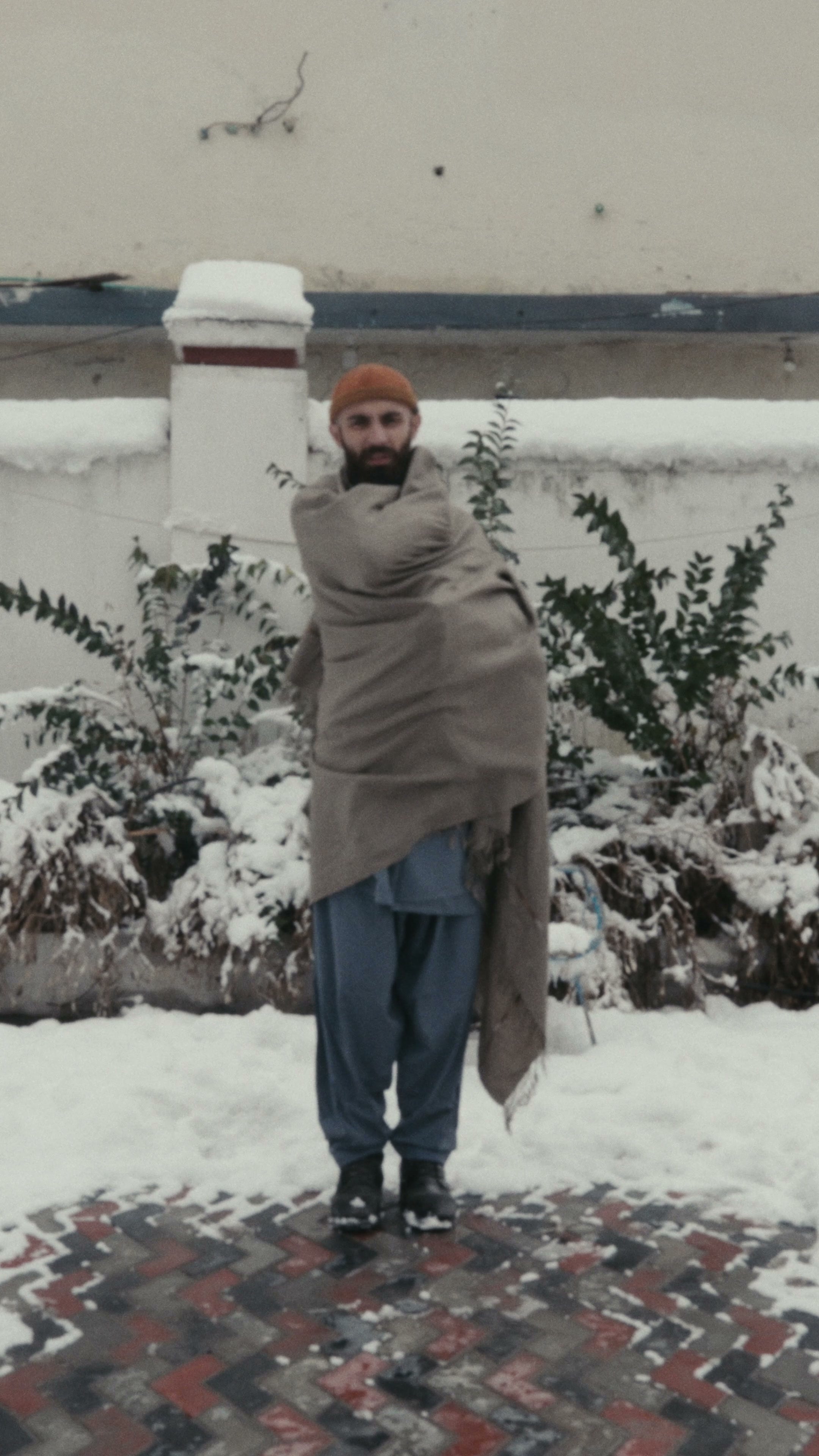
For genuine cold, wind, frost, a real winter, go for fibre and weight together: a heavy handwoven yak or wool shawl in a dense weave. The yak for the most warmth, the heavyweight wool when you want that warmth with a bit more structure and a lower price.
For cool rather than cold, an autumn city, a chilly office, a midweight cloth does plenty and drapes more easily, so you will wear it more often. A shawl you leave at home because it is too much is not keeping you warm.
If you are weighing up the lines properly, our Guide to SHAAL lays out the handwoven, cashmere and milled wool ranges side by side, so you can match the weight to your actual winter rather than the one on the label. Buy for the cold you have, not the cold you imagine.