
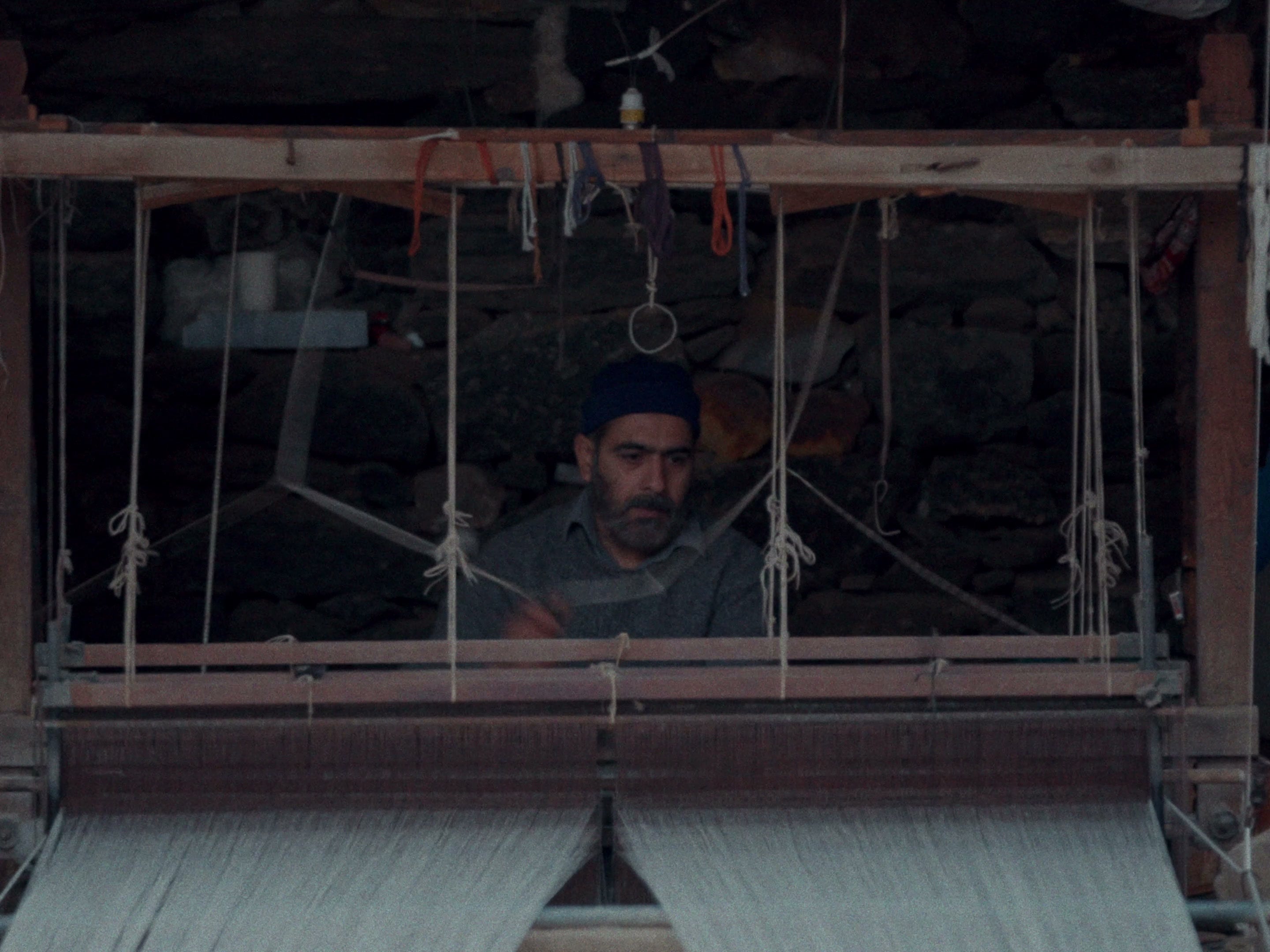
You hear the shed before you see it. From the lane it's a steady wooden knock, two beats and a pause, two beats and a pause, a dozen of them slightly out of time, so the whole building seems to breathe. Inside, the light comes low through one window and the air smells of raw wool and an oil that isn't from any machine. Eight men sit at eight looms. None of them looks up. (If you'd rather watch it than read it, the looms are running in our brand film.)
This is khadi. Or it's what khadi has become here, a few miles outside Mingora, in the Swat Valley in the north of Pakistan.
What the word actually means
Khadi began as an idea more than a cloth. In India, a century ago, Gandhi pushed hand-spinning and hand-weaving as a way for ordinary people to clothe themselves without the empire's mills. Spin your own yarn, weave your own cloth, owe nobody. The word settled into meaning exactly that: fabric that is both hand-spun and hand-woven, end to end, with no powered machinery anywhere in the chain.
Most "handmade" cloth today quietly fails the first half. The yarn is spun in a factory and only the weaving is done by hand. Real khadi is slower than that, because before anyone can weave, somebody has to make the thread.
The men at the looms
The eldest here is Bakht Zada. He's somewhere past seventy, though he isn't sure of the number and finds the question funny, and he has woven since he was small enough to sit under the loom and pass the shuttle up to his father. Two looms along, his own sons are working. In Pashto the weaving families are called *Jollagan*, a word that is half a trade and half a surname. The longer story of how this craft reached us is on our Roots page.
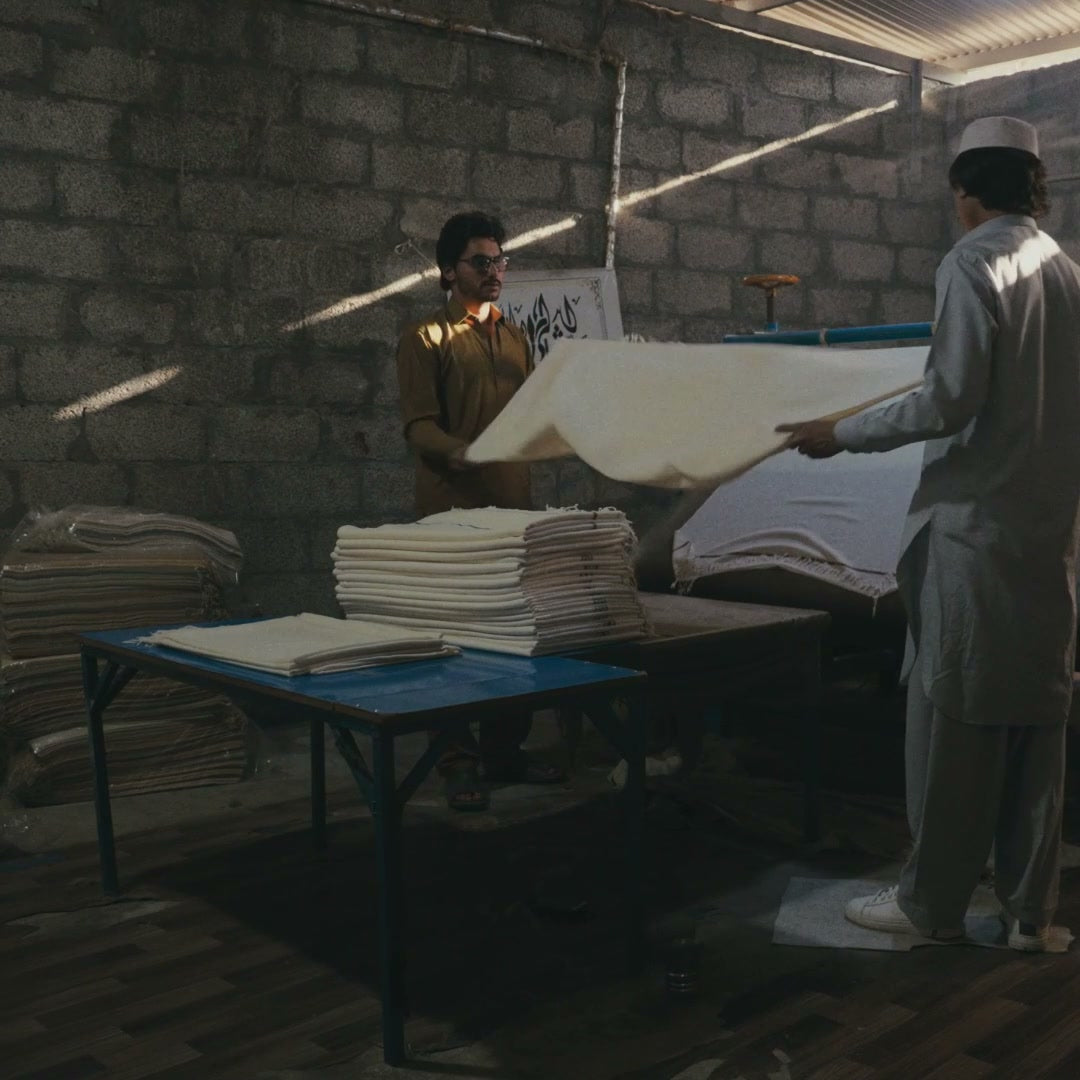
People picture handweaving as one person making one shawl. It isn't. By the time a single heavyweight piece leaves the valley, something like thirty-seven pairs of hands have been on it: the men who shear and clean the wool, the women in the villages higher up who spin it into yarn, the dyer working in a yard out the back, the man who sets the warp, the two or three who weave, the ones who wash, finish and check it. It's a relay, not a solo.
Why it takes so long, and why that's the point
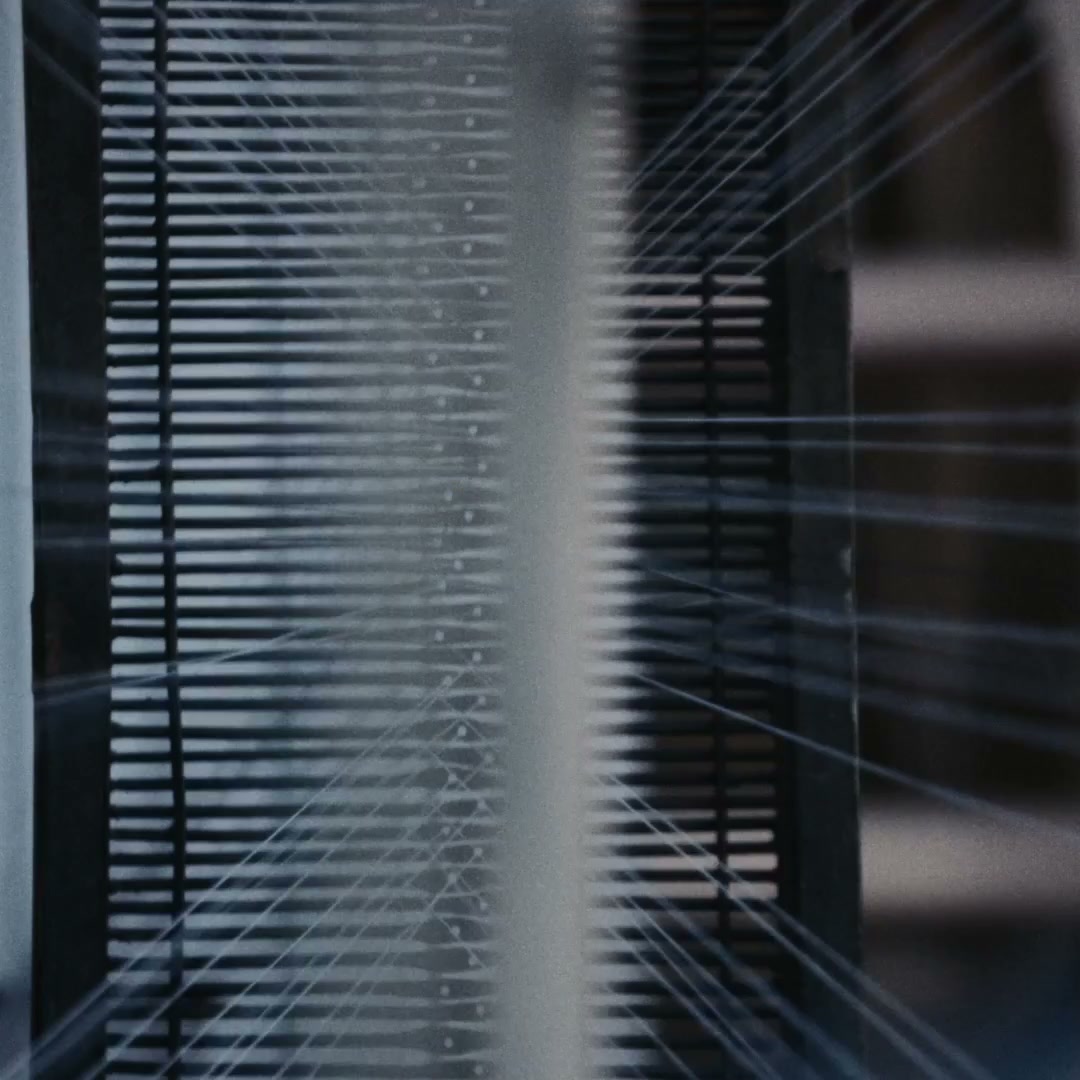
On a good hour Bakht Zada weaves maybe a forearm's length of cloth, leaning his whole weight into the beater to pack each row of thread down tight. A heavyweight shawl is two metres. You can do the sum. A loom in a mill somewhere else would manage the same length in under a minute, never tire, never need paying, never stop for tea.
So why bother. Two reasons, and only one of them is romance.
The honest one first. Handwoven cloth is never quite identical from end to end. Hold a handwoven heavyweight shawl to the light and the weave sits a fraction tighter in one stretch than another, where a different man took over, or the same man tired toward evening. People who don't know cloth call that a flaw. People who do call it a fingerprint. A mill shawl is perfect and anonymous. This one isn't, and that's the entire appeal.
The second reason is duller and matters more. Somewhere north of fifty thousand people in this valley still live off the handloom. When the work dries up they don't retrain. They leave, and the skill leaves with them, because nobody learns a craft that doesn't pay. Keeping the looms running isn't charity. It's the only thing that keeps the looms running.
What you're actually buying
If you've wondered why a handwoven wool shawl costs what it does next to a high-street scarf, that's the answer, and it isn't markup. It's weeks of one of the oldest ways of making cloth left on earth, done by people a download can't replace. The Guide to SHAAL covers the fibres and the care. This is the part that comes before any of it.
When we left, Bakht Zada didn't stop to say goodbye. He lifted one hand off the beater, nodded, and went back to it. Two beats and a pause. The shed kept breathing.