
The walk to the display is never the problem. You arrive at the park a bit flushed, coat half open, wondering if you overdid it. Then you stand on wet grass for the best part of two hours while the bonfire gets going and the fireworks start twenty minutes late. By the finale you can't feel your toes, and the child on your shoulders has gone very quiet.
So the trick on 5 November is to dress for the standing, not the walking.
Why standing still is colder than walking
Your body makes heat as a by-product of moving. Standing quietly, an adult produces somewhere around 125 watts. At a brisk walk it's nearer 400. Stop walking and about two thirds of your own heating switches off, while the cold, damp air carries on taking heat away exactly as before.
The bonfire doesn't fix this as much as you'd hope. It roasts your face and shins and does nothing for your back. Drizzle makes it worse, because wet fabric loses much of its insulation.
So you want layers you can open on the way and close up on arrival, plus one big warm thing for when you stop.
The layers underneath
Start with a thin wool or merino top next to the skin. Cotton is the one to avoid here. It soaks up sweat from the walk and then sits cold against your back all night. Over that, a jumper, then your winter coat, ideally one with a hood.
A small opinion: a shiny puffer isn't ideal near a bonfire. The shell is usually nylon, and a drifting ember can melt a neat little hole in it before you've noticed. If that's what you own, stand further back.
Feet and hands go first
Feet are where most people give up. Wet ground draws heat straight through the thin sole of a trainer. Wear boots with thick soles and one pair of good wool socks rather than two thin ones, since two pairs squeeze the foot and a squashed foot gets colder. Wellies cope with mud but are cold on their own, so add a wool insole.
Hands need two kinds of glove. Knitted gloves are fine for standing about. For sparklers, fire services advise gloves, preferably leather. That applies to the adult lighting them as much as the child waving one about. A pair of hand warmers in your pockets costs very little and earns its keep by about half past seven.
Add a hat. It isn't glamorous. You'll be glad of it.
A wool shawl over the coat
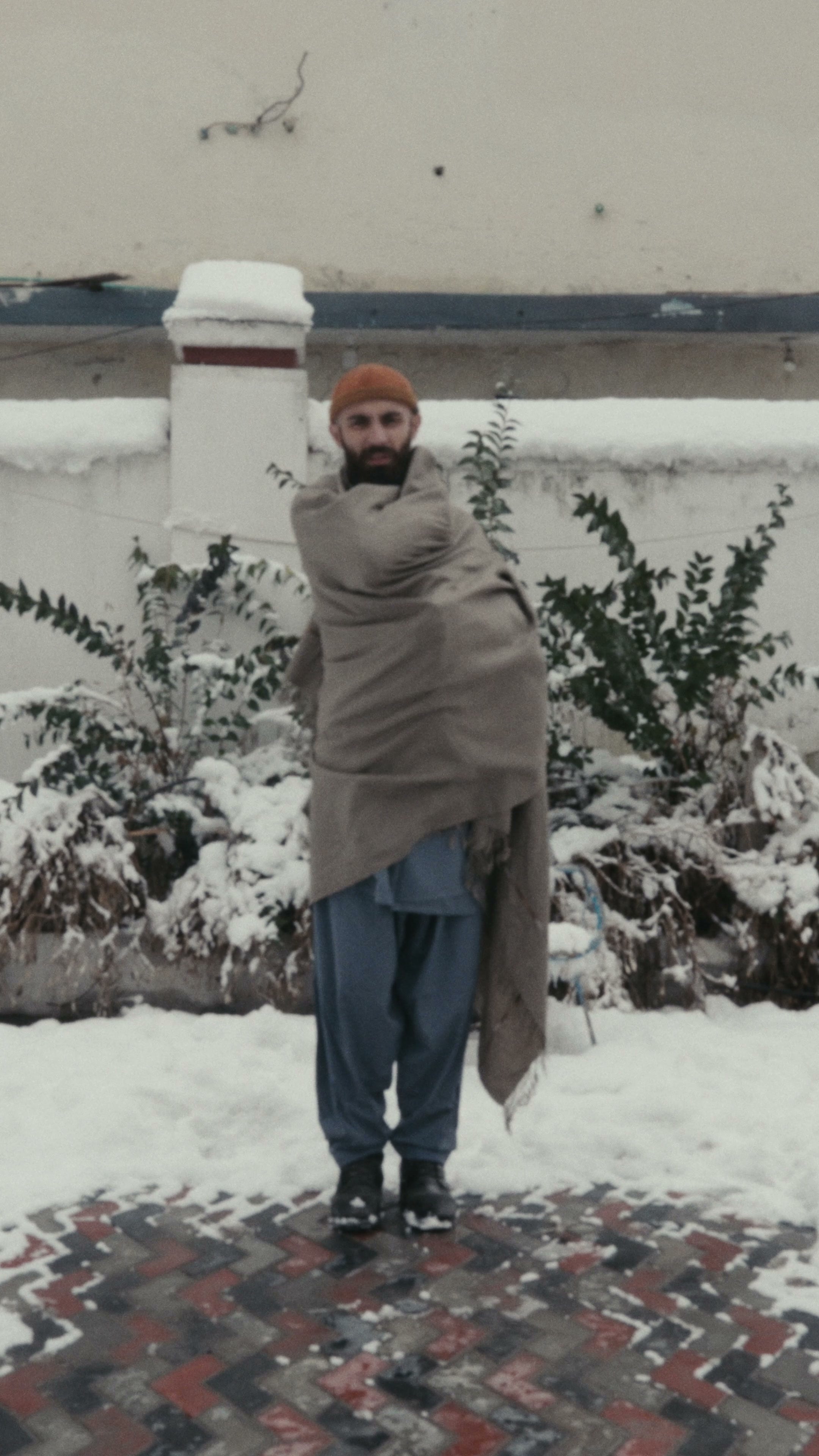
This is the bit most people miss. Once you've arrived and stopped walking, throw a large wool shawl over everything, coat included. It covers the back of your neck and the whole of your back, the parts the bonfire never reaches, and if the drizzle starts you can pull one edge up over your head. On the walk there it sits folded in a tote bag.
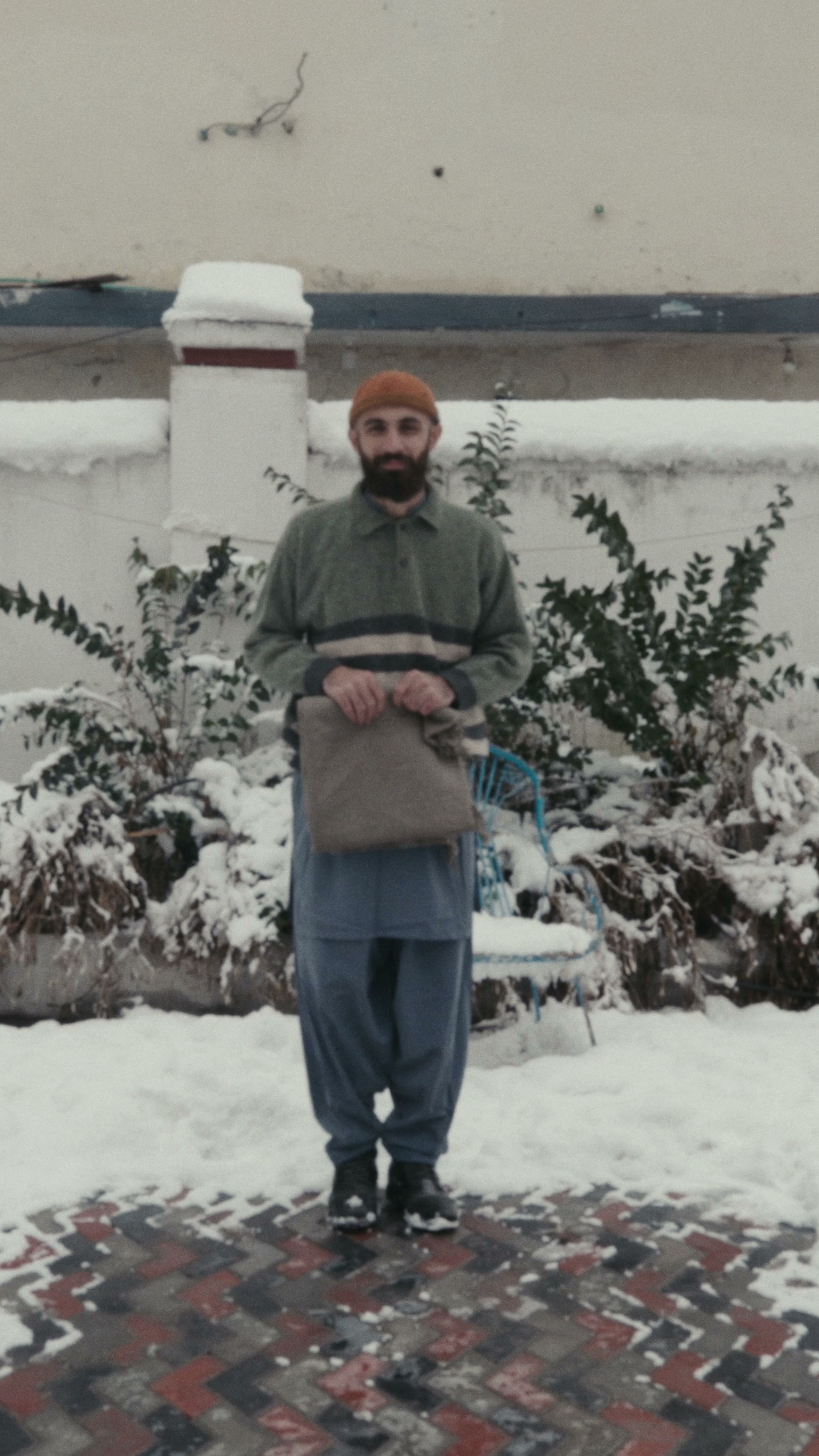
Size matters. A shawl that only just covers your shoulders won't stretch over a padded coat, so go big. If you're unsure how to arrange it, our guide to wearing a shawl covers the draping; for a field on 5 November, a plain wrap with one end flung back over the shoulder does the job.
Our heavyweight yak shawl is the one we'd take. It's 60% yak and 40% lambswool, handwoven on manual looms in the Swat Valley, where a cold winter is just a normal winter, and it comes in 100 x 200 cm or 120 x 240 cm. The bigger size goes round a coat with room to spare, and is big enough to share with whoever forgot their own.
Wool, sparks and the bonfire
Wool also suits a night like this because it's harder to set alight than most clothing fabrics. According to the Woolmark Company, wool needs somewhere around 570 to 600°C to ignite, and when it does catch it tends to char and go out by itself rather than melt. Synthetics like polyester (which is what fleece is made of) and nylon melt instead, and molten plastic sticks to skin. Northamptonshire Fire and Rescue goes as far as advising whoever lights a bonfire to wear a substantial outer layer of wool or another low-flammability material.
None of that makes wool fireproof. It will still scorch, and it will still burn if it gets hot enough, so treat it as a better choice and nothing more. Keep a sensible distance from the fire, don't stand downwind where embers drift, and keep fringes and loose ends well away from sparklers. When someone hands you a lit one, tuck the ends of your shawl in or throw them back over your shoulder first.
Before you leave the house
Put it all by the door in the afternoon: boots, wool socks, the hat, two sets of gloves, hand warmers and the shawl folded in a bag. Then walk there with your coat open and only close up when you've found your spot. If you're still deciding which weight of shawl to own before winter proper, the Guide to SHAAL sets out the sizes and the different weaves, from the lighter blends to the dense yak.