
A cotton hoodie that catches a shower goes cold and stays cold. A wool jumper that catches the same shower feels damp and a bit heavier, and somehow still warm. Anyone who walks a dog through a British October has noticed this without ever being told why.
There's a reason, and it holds up in the lab. But wool isn't waterproof, and past a certain point it's just a heavy, wet thing on your shoulders.
Wool soaks up vapour before it feels wet
Wool is hygroscopic. The core of each fibre pulls water vapour out of the air and holds it inside, rather than in the gaps between fibres. The Woolmark Company (the wool industry's own body, so allow for some enthusiasm) says wool can take up to 35% of its weight before it starts to feel wet against the skin.
Why that helps: warmth in any fabric comes mostly from still air trapped between the fibres, which we went into in the warmest shawl post. Moisture held inside the fibre isn't filling those air pockets. Water sitting between the fibres is.
The small heater inside the fibre
When wool absorbs water vapour it gives off a little heat, called heat of sorption. In a 1989 wearer trial published in Textile Research Journal, Stuart, Schneider and Turner found people could feel it in typical winter conditions, and rated wool garments warmer than acrylic under some conditions. Wool releases more of this heat than cotton, and polyester next to none.
Don't oversell it, though. The heat only flows while the fibre is taking up moisture, so it tails off once the wool has caught up with the damp air around it. The same trial found the full effect only showed up when the garments had been thoroughly dried before wearing. Think of it as a brief warm welcome when you step out into wet air, not a heating system.
Why wet cotton chills you
Water conducts heat roughly twenty times better than still air. Once a fabric's air pockets fill with water the insulation drains away, and as that water evaporates off you it takes more heat with it.
In a 1992 study measuring heat flow through damp fabrics, Schneider, Hoschke and Goldsmid found wool insulated better under moist conditions than cotton, polypropylene or porous acrylic. A later paper using the same test found cotton let the most heat through at almost every level of wetness, and wool the least, until the fabric held about twice its own weight in water. Past that, the differences faded. Soaked is soaked.
Is wool waterproof? No
Each wool fibre has a coating of fatty acid, only a few nanometres thick, chemically bonded to its outer surface. It repels water, while the core underneath happily absorbs it. That's why rain beads on a good wool coat for a while before it starts to sink in.
You'll often hear that lanolin keeps wool dry. Mostly not. The bulk of that fleece grease is scoured out before spinning, and combed wool is typically specified at only 1 to 2% residual grease. The water-shedding layer is the bonded one, which survives scouring.
Weave matters too. A dense, heavy cloth gives raindrops fewer ways through than a fine, open one. Our Heavyweight, a handwoven lamb's wool at 310 GSM, should handle a few minutes of drizzle far better than a fine, open summer wrap. It still isn't rainwear, and we don't sell it as such.
Soaked through is a different story
Once rain gets right in, wool holds a lot of it, gets heavy and takes its time drying. In the moist-fabric research, drying time tracked how much water was in the cloth, whatever the fibre, and thicker fabrics held more. So a heavy wool shawl that's been through a downpour is likely to stay wet longer than a thin cotton scarf, even if it feels warmer while it does.
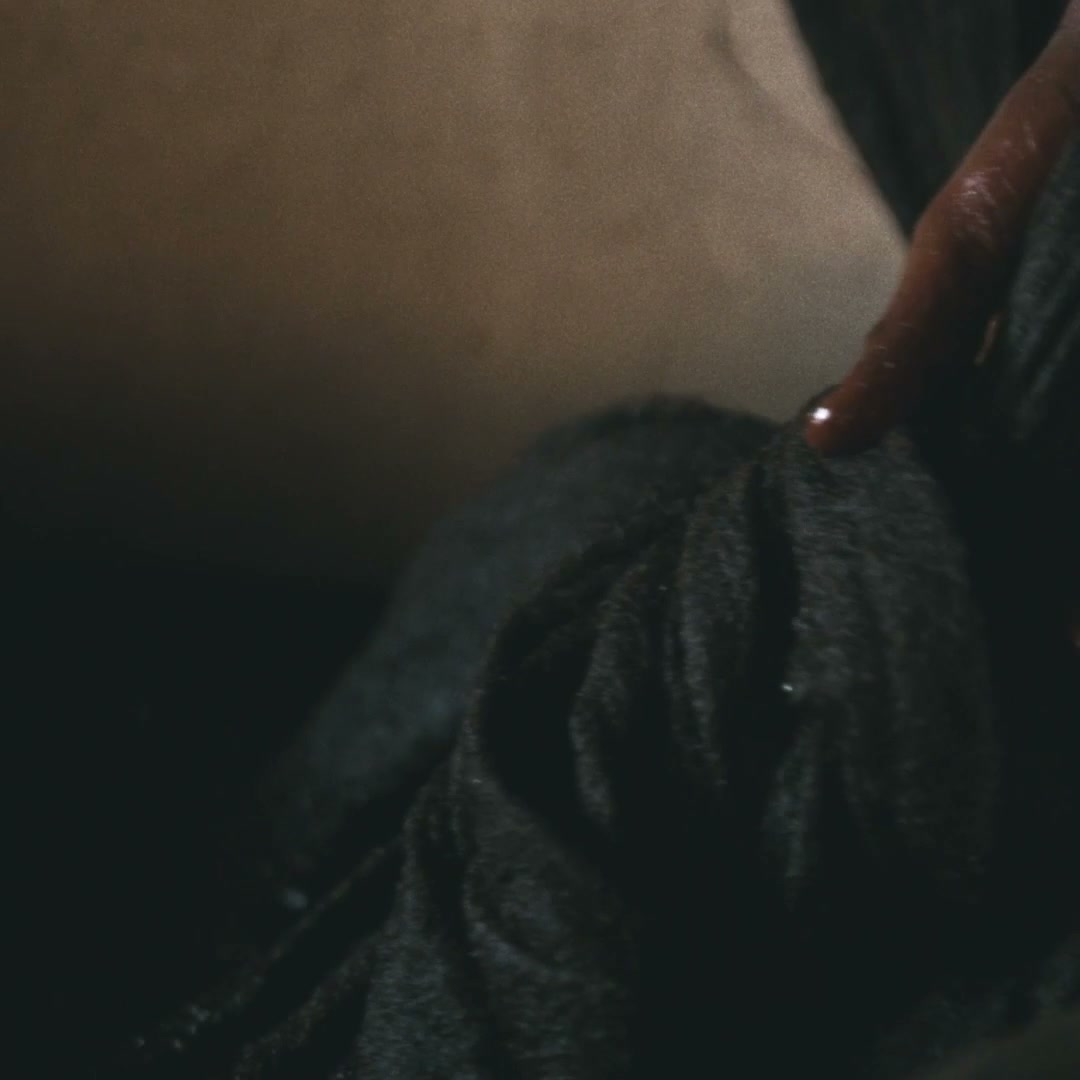
That frame from our Swat film shows how much water wool cloth carries. At home, don't copy the wringing. Press the water out instead.
Drizzle or downpour: how to wear it
Our view: a wool shawl is a drizzle garment, and a very good one.
- Mizzle, a short walk, a dash between shops. Wear it as the outer layer, folded double over the shoulders so there's more cloth for the damp to get through.
- Proper rain. Put the shawl under a waterproof, or wrap it scarf-style inside the coat collar, and carry an umbrella. The shell keeps the water out; the wool does the warm part.
- A long walk in a downpour with only a shawl. Don't. You'll arrive carrying a wet blanket.
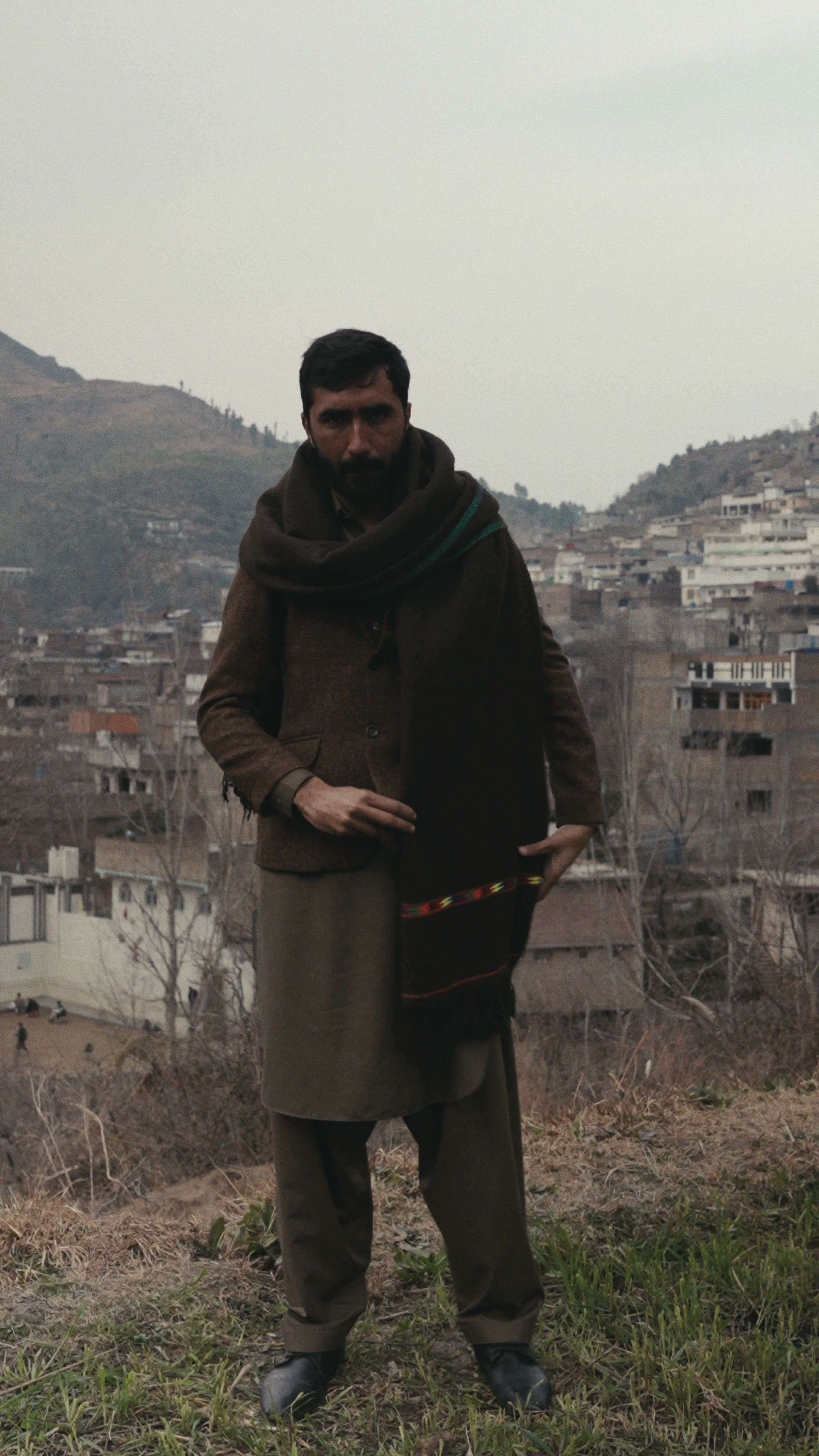
Drying a wet shawl
Roll it in a towel and press to get the worst of the water out, without twisting. Then lay it flat on a dry towel and nudge it back into shape, away from radiators and other direct heat. Never hang it wet, because the weight of the water drags the weave long and narrow, and never tumble dry it.
If it came home muddy as well as wet, how to wash a wool shawl covers the rest, and the full care notes for our pieces are in the Guide to SHAAL.
The one rule worth remembering: let it dry right through before you fold it away. A shawl put back in a drawer damp is how you end up with a musty smell, and that takes far longer to fix than a wet evening.