
Most of the time, your skin isn't reacting to wool. It's being poked.
Every piece of woollen cloth has thousands of fibre ends standing up from its surface. Most are fine enough to bend the moment they touch you. A few are too thick to bend, and those press into the skin hard enough to set off the nerve endings that deal in pain and itch. That's the prickle. It's mechanics, not chemistry, and once you know that, most of the fixes follow.
It's the thick ends, not the wool
The force a protruding end can carry before it buckles rises with the cube of its diameter and falls with the square of how far it sticks out. So the worst offender is a short, thick stub. A 2017 review in Acta Dermato-Venereologica puts the trigger at around 75 milligrams of force, and links irritation to fibres coarser than about 30 to 32 microns.
The wool trade has a number for this, the comfort factor: the percentage of fibres in a batch that are 30 microns or finer. Wool for clothing should score at least 95%. Past roughly 5% coarse fibres, most people start calling the cloth scratchy.
The proportion matters more than the average. In a 1992 Australian trial, a knit of 23.2-micron wool was judged less prickly than one of 21.5-micron wool, because the "finer" batch was more uneven and carried more coarse fibres (5.0% over 30 microns, against 3.6%). An average on a label tells you less than you'd hope.
Allergy is a different, rarer thing
The same review found no good evidence that wool fibre itself is an allergen. Lanolin, the grease sheep make, is a genuine contact allergen for some people: about 1.7% a year of people patch-tested for suspected contact allergies between 1982 and 1996. But modern scouring takes lanolin in wool below 0.5%, and dyeing and finishing strip more. You'll meet far more of it in creams and lip balms than in a shawl.
Eczema is where the sources disagree. A small trial in 39 children under three with mild to moderate eczema found their skin did better in superfine merino (17.5 microns or finer) than in cotton. It was funded by Australian Wool Innovation, the industry body, and the NHS still lists "some fabrics" among things that can make eczema worse. If wool leaves you with a rash, swelling, or anything that doesn't settle once it's off, take that to a GP or a dermatologist. A shawl company is the wrong place for a diagnosis.
Which fibres prickle least
Rough averages. Every animal, flock and grade varies.
| Fibre | Typical diameter (microns) | Against bare skin | |---|---|---| | Pashmina | under 16 | Very rarely prickles | | Cashmere | about 14 to 19 | Rarely, if properly dehaired | | Yak down | about 16 to 19 | Rarely; a drier, grippier feel | | Merino | about 15 to 24 | Depends heavily on grade | | Lambswool | about 16.5 to 25 | Usually fine; varies by flock | | Most British breeds | about 29 to 35 | Prickly for many people | | Mountain breeds (Blackface, Swaledale) | 35 and up | Carpets, mostly, and for good reason |
That bottom half explains a lot of childhood jumpers. Much British wool sits right on the 30-micron line. The merino and lambswool grades are untangled in lambswool vs merino.
My own view: I'd take well-sorted lambswool over cheap, badly dehaired cashmere every time. Cashmere goats grow coarse guard hairs alongside the down, and when those aren't fully removed the cloth prickles in a way the label never mentions.
Why the neck is the honest test
Stroking a shawl in a shop tells you about smoothness and drape. Fingertips are thick-skinned and busy judging texture, so they rarely notice a handful of stiff ends. The side of your neck is far less forgiving, and it's where a shawl spends its day, rubbing a little every time you turn your head.
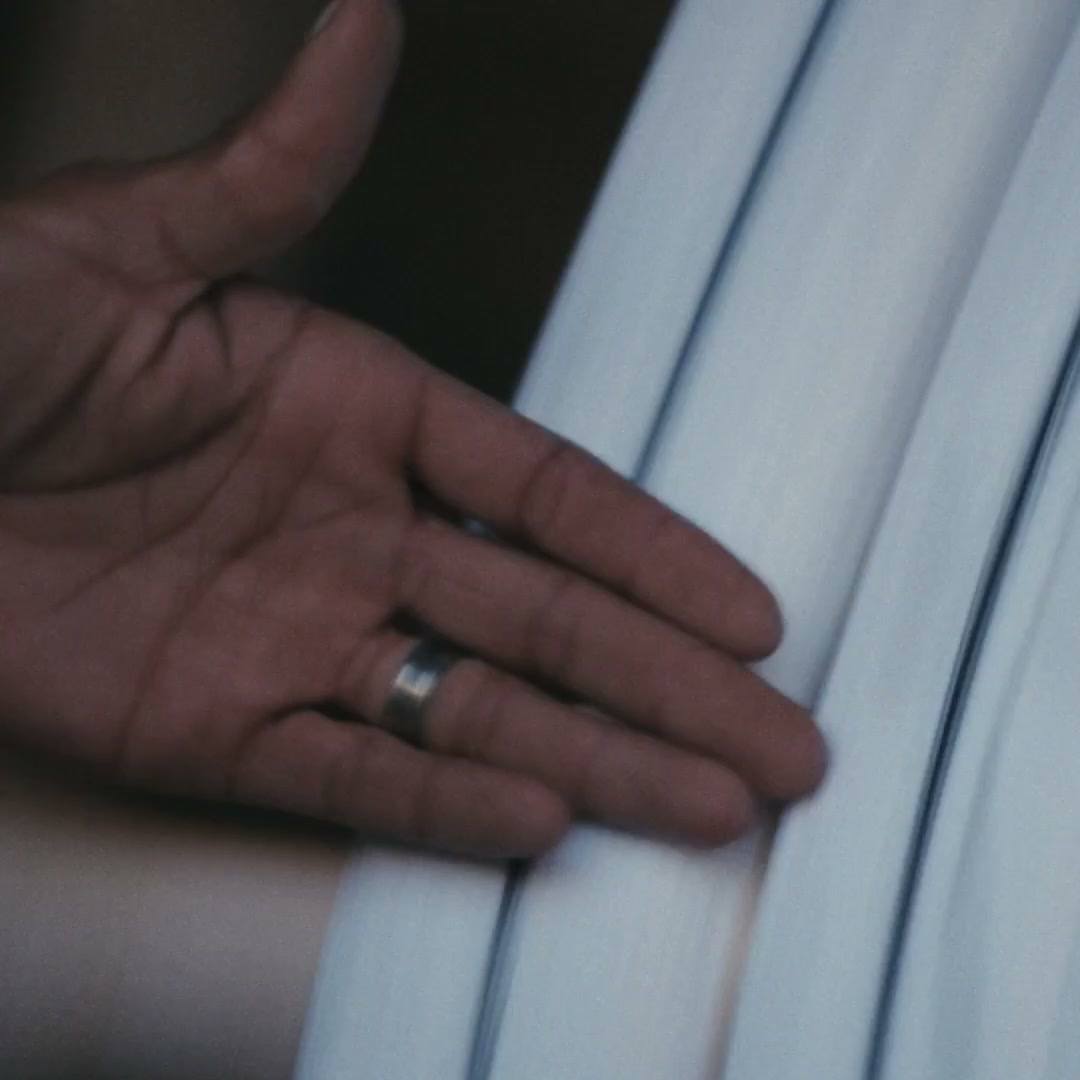
So hold it against your neck, or the inside of your wrist, for a full minute. Prickle can take a while to register. Then look at the cloth against the light. A halo of short, straight, wiry hairs, sometimes darker or shinier than the rest, is coarse fibre showing itself.
Same fibre, different feel
Two shawls of the same wool can feel quite different. A tightly twisted yarn locks more ends inside; a loose, lofty one lets more out. A brushed cloth has plenty of ends standing up, but they're long, and long ends buckle easily, which is partly why brushed fabric feels soft. A surface cropped short leaves stubble, and stubble is exactly what the buckling maths says will prickle. Handwoven cloth is usually washed after it comes off the loom, which relaxes the yarn and softens the handle.
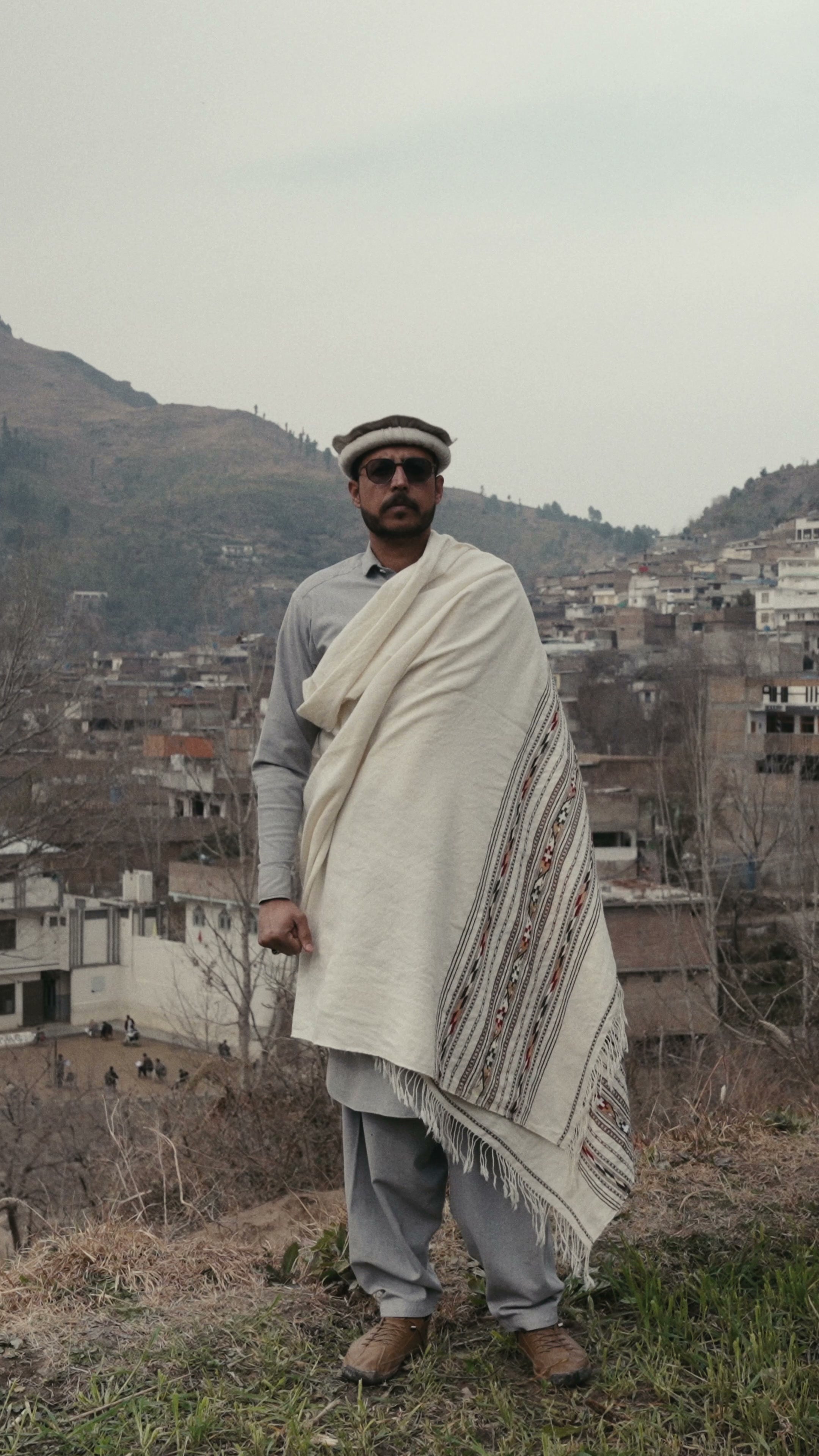
If your neck is fussy, check the label for fibre and percentage, not just "wool". In our range we'd point you at the Midweight Pashmina blend: 30% pashmina from the Changthangi goat of Ladakh and 70% first-shearing lambswool from the Swat Valley, handwoven on manual looms.
What helps if it already itches
- Put a layer between. A collar, a roll-neck, or a thin cotton or silk scarf at the throat, with the shawl over the top.
- Wash it once, gently. Cool water, a wool detergent, dried flat. The full method is in how to wash a wool shawl.
- Give it a few wears. Some of the short, loose ends work their way out early on. Often it calms down. That isn't a promise.
- Don't count on conditioner. It might make the surface feel smoother for a wash or two, but it can't make a 32-micron fibre any thinner.
If a piece still prickles after all that, it's the fibre, and no amount of fussing will change it. Wear it over a coat collar, where nothing touches skin, or give it to someone with a tougher neck. And if you're choosing from scratch, the Guide to SHAAL compares softness across our five constructions, so you can start soft rather than hope something softens.