
Cabin air on a long-haul flight sits at around 10 to 20 per cent humidity, drier than most deserts, and the temperature swings from stuffy at boarding to properly cold four hours in, when the crew dim the lights and the air conditioning wins. The thin polyester blanket in the seat pocket, if there is one at all, was not built for that. A good travel wrap is. One large piece of woven wool does the job of the blanket, the extra jumper and half the neck pillow, and then walks off the plane looking like clothing rather than bedding.
What actually counts
The name gets used loosely, so here is the working definition: a wrap big enough to cover you from shoulders to knees while you are sitting down, in a cloth soft enough to sleep against. That rules out a scarf, which is too small, and a stiff sofa throw, which is not wearable. In numbers, 100 by 200 cm is the minimum that works, and bigger is better. At the top end, around 150 by 270 cm, you are into wearable-blanket territory, a close cousin of the blanket scarf. The difference is intent. A blanket scarf is a style decision. A travel wrap is equipment.
Why wool and not fleece
Polyester fleece feels warm in the first twenty minutes because it is windproof and dense. Then you sleep under it, and it goes clammy, because it cannot move moisture away from you. Wool can absorb roughly 30 per cent of its own weight in moisture vapour before it even feels damp, so it buffers you through the cabin's swings instead of amplifying them. It also resists odour, which matters by day three of a trip when the wrap has been blanket, pillow and coat.
And I would pick wool over cashmere here, even though cashmere is the more luxurious fibre. Cashmere is fine and soft-surfaced, and it pills quickly under a rucksack strap or a seatbelt. Wool takes the abrasion of transit without complaint. Cashmere for dinner, wool for the airport.
The size question, honestly
There is a real trade-off and it is worth stating plainly. The blanket format wins on the plane and loses in the bag.
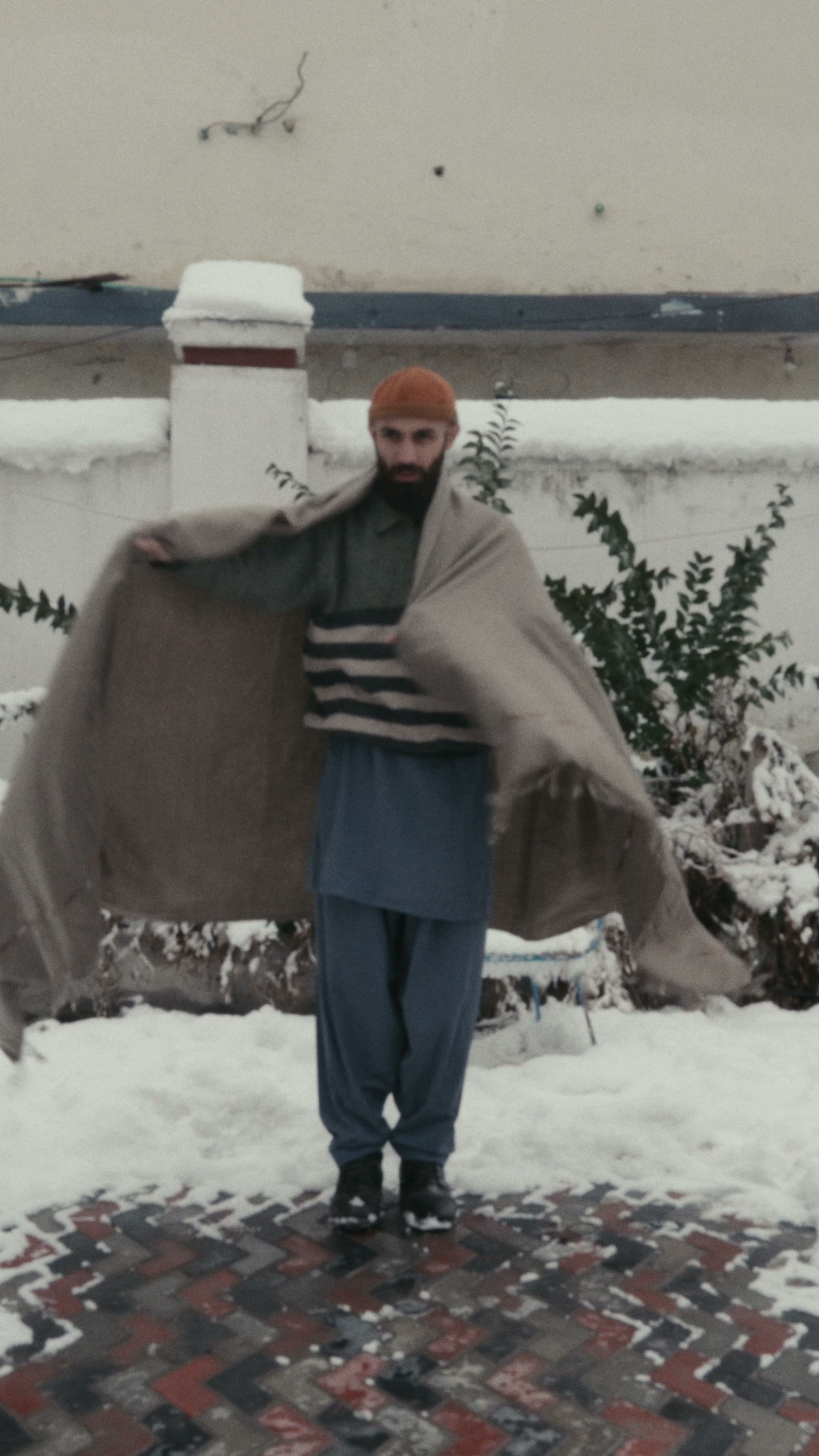
Our blanket midweight is 150 by 270 cm of first-shearing lambswool, woven by hand on manual looms, at 230 grams per square metre. That works out to a little over 900 grams of cloth, enough to cover you completely in a seat with spare fabric to tuck under your feet, and light enough per square metre that you can wear it doubled over your shoulders without feeling buried. If the flight is the reason you are buying, this is the size.
If you travel carry-on only and the wrap has to share space with everything else, a standard shawl at 100 by 200 or 120 by 240 cm is the more sensible call. The 120 by 240 still covers your torso and legs in a seat; it just will not tuck and wrap the way the full blanket does.
Pack it or wear it
Folded lengthwise into thirds and rolled, even the blanket size takes up about as much room as a rolled hoodie. But the better trick is not to pack it at all. Airlines weigh your bag, not you. Wear it through the airport draped over your shoulders, and it costs you nothing in luggage allowance.
In the seat it earns its place several times over. Over the shoulders while you read. Opened out as a blanket when you sleep. Rolled into a lumbar pad on hour six, or folded into a cushion against the window. On arrival somewhere cold it is your outer layer until you get to the hotel, and once there it is the throw the room never has.
After the flight
Trains have the same air conditioning problem planes do, just with better views, and the wrap solves it the same way. The drapes themselves, the shoulder wrap, the loop, the one-shoulder throw, all carry over from ordinary shawl wearing, and our guide to wearing a shawl covers those properly.
One last practical note. Pick a dark or mid tone; our blanket comes in black, which is the most forgiving travel colour there is. A pale cream wrap will show every armrest and train seat it has ever touched, and nobody wants to hand-wash in a hotel sink. If you are weighing the blanket against the standard sizes, or wool against the finer fibres, the Guide to SHAAL lays the whole range out side by side. Buy the size for the journeys you actually take, and it will be the one thing in your bag you never regret.