
Most people judge a shawl by stroking it on the hanger. That's the one test a shop can rig most easily, because softness can be added in the finishing bath, and a lot of it rinses out within a few washes. What tells you whether a shawl will last is less glamorous: a label, a number, a window and the edges.
Read the label, because the law makes it worth reading
UK fibre labelling falls under the retained Textile Regulation (EU) 1007/2011 and the Textile Products (Labelling and Fibre Composition) Regulations 2012. Every fibre has to be named with its percentage by weight, in descending order. "70% wool, 30% polyamide" is honest. "Wool blend" on its own is not enough.
Only names from an approved list can be used. Wool, cashmere, yak, mohair and silk are on it. "Cashmere feel" and "pashmina" are not, so if they appear where the composition should be, be suspicious.
"100%", "pure" and "all" are reserved for products made of one fibre, with a small allowance of up to 2% for stray fibres that are technically unavoidable. And when you buy online, the composition must be visible before you pay. A listing that hides it is out of line.
The word "wool" says little about grade. Merino, lambswool and a coarse carpet-grade fleece can all wear it, which is why it pays to know the main types of wool and ask which one you're holding.
Work out the weight in gsm
Grams per square metre is the most useful number on a shawl, and plenty of sellers leave it out. Work it out yourself: a 100 by 200 cm shawl covers two square metres. If it weighs 500 g, it's 250 gsm.
Roughly, under 200 gsm is a light, drapey piece for spring evenings and travel. Around 250 to 350 is a proper everyday winter shawl. Past 400 you're into blanket territory, lovely on a cold platform, heavy on a long walk.
Weight isn't warmth, though. A lofty, woollen-spun cloth traps more air than a flat, tightly spun one of the same gsm. What gsm really predicts is drape: light cloth falls into soft ripples, heavy cloth hangs straight and holds a knot.
Hold it up to the light
Hold a single layer against a window. You want an even grid of light from edge to middle. Thin patches or streaks mean uneven spinning or a loose beat on the loom.
Then press a fingertip into the cloth and drag it. If the threads slide apart and leave a gap, the weave is too loose, and it will snag on bag straps and stretch at the shoulders.
Last, crush a corner in your fist for ten seconds. Wool springs back. If it stays crumpled like tissue paper, suspect viscose.
Soft in the shop, fuzzy by February
Cheaper shawls often get a silicone softener in finishing. It makes the surface slick, sometimes with a faint sheen, and it feels wonderful until it washes out. Heavy brushing is similar: a fluffy nap that hides a loose weave and pills fast.
I'd rather have a shawl that feels a little crisp on day one and softens with wear. Good wool does that. Some early pilling is normal for any soft, short fibre, cashmere included. Pilling that keeps coming back in the same spot for months usually means short fibres or loosely twisted yarn.
Check the edges and the fringe
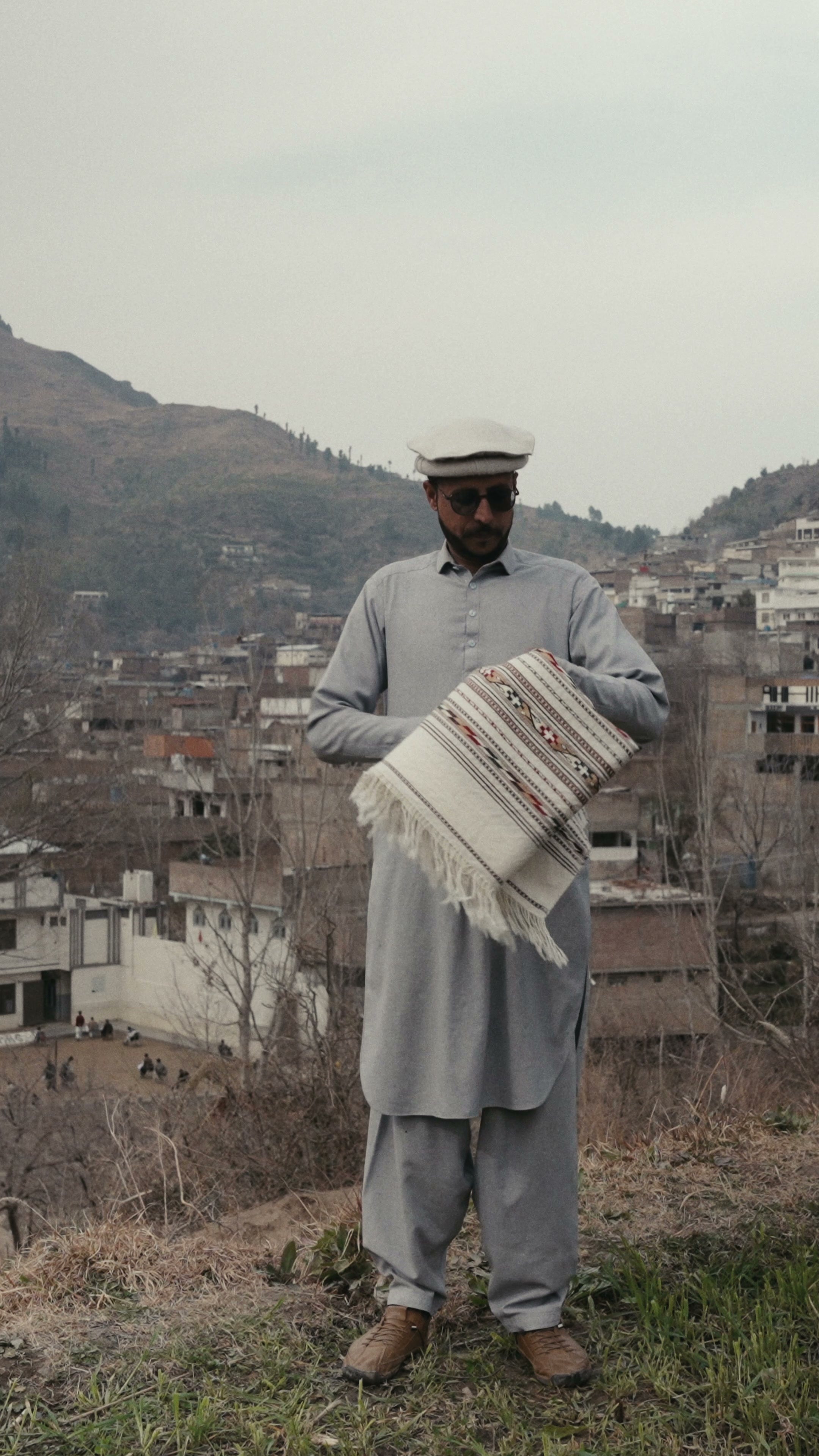
The selvedges should be straight and flat, not wavy or puckered. The best fringe is made from the warp threads themselves, twisted and knotted so it's part of the cloth. Fringe that's sewn on, or held by a line of machine stitching, is the first thing to come loose. Give a few knots a gentle tug. If there's embroidery, turn it over: the back should be tidy, without long loops that catch on rings.
Handwoven or machine-made
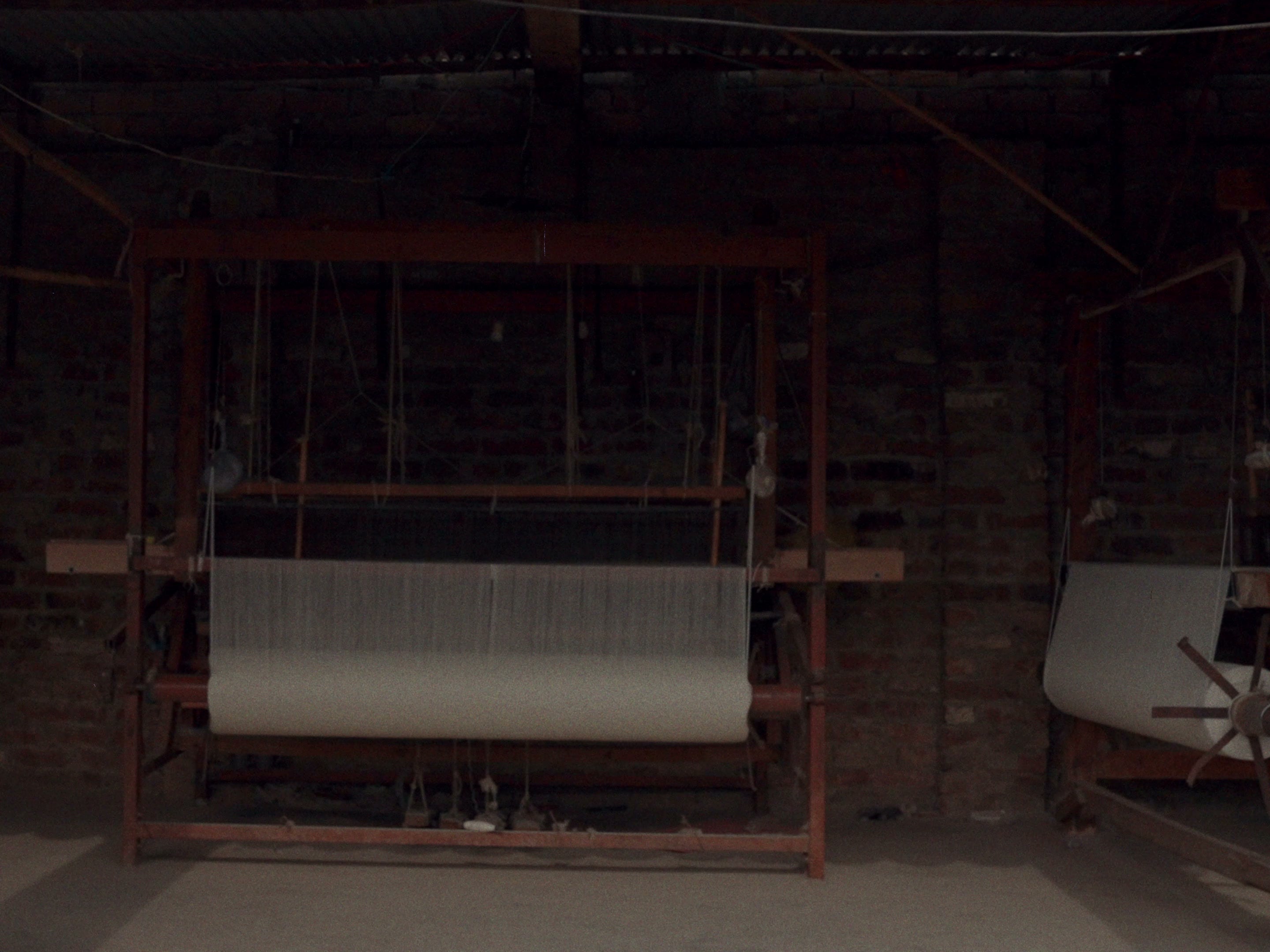
A hand loom leaves small traces. The weft is beaten in by a person, so density varies slightly and the selvedges wander a little. That isn't a fault. A power loom gives perfectly regular cloth, and good milled cloth is often easier to wash. Neither is automatically better; the question is whether the price matches. "Handwoven" isn't a regulated fibre term, so ask where it was woven and on what kind of loom. For what a working hand loom actually looks like, here's a morning at the Khadi looms in Swat.
The trouble with "pashmina"
Because pashmina isn't a legal fibre name in the UK, look past the swing tag to the composition. The £10 "pashminas" on market stalls are nearly always viscose or acrylic. Real pashmina is fine cashmere from Changthangi goats in Ladakh, and it's never that cheap. The overlap between the two words is explained in cashmere vs pashmina.
Ignore the ring test: any thin shawl, polyester included, will pull through a wedding ring. On one you already own, burning a single fringe thread tells you more. Wool and cashmere smell of singed hair and leave crumbly ash. Acrylic melts into a hard bead. Viscose burns like paper.
Before you hand over the money
If an online listing is thin, message the seller. Ask for the full fibre composition, the weight and dimensions, and a close-up of the edge and fringe. To see how those numbers compare across light, midweight and blanket-weight shawls, the Guide to SHAAL sets them out side by side.